
Anúncios
Every dish we savor has a story, often hidden behind centuries of culinary evolution, unexpected inventors, and forgotten pioneers who shaped our modern menus.
Anúncios
🍕 The Accidental Origins of Pizza: A Royal Mistake That Became Iconic
Pizza, the beloved Italian staple that has conquered every corner of the globe, wasn’t always the sophisticated dish we know today. In fact, the modern pizza owes its existence to a Neapolitan baker named Raffaele Esposito, who in 1889 was tasked with creating a special dish for Queen Margherita of Italy. The story goes that Esposito wanted to honor the Queen with a patriotic creation, so he topped flatbread with tomatoes, mozzarella cheese, and basil—representing the colors of the Italian flag.
Anúncios
However, the truth is more nuanced. Working-class Neapolitans had been eating flatbreads with various toppings for decades before Esposito’s royal commission. What Esposito actually did was elevate a peasant food into something worthy of royalty, forever changing pizza’s social status. Before this moment, pizza was street food consumed by the poor, often sold by vendors who carried them on their heads through Naples’ narrow streets.
The genius of Esposito wasn’t just in the combination of ingredients—it was in the marketing. By associating his creation with Queen Margherita, he gave pizza an air of legitimacy that allowed it to spread beyond Naples and eventually across oceans. Today, the pizza industry generates over $145 billion annually worldwide, all from what started as a humble working-class meal.
🍔 The Contested Birth of the Hamburger: Multiple Claimants to an American Icon
The hamburger might be America’s most recognizable food export, but its origins are fiercely debated. At least four different American cities claim to be the birthplace of this iconic sandwich: New Haven, Connecticut; Seymour, Wisconsin; Hamburg, New York; and Athens, Texas.
The most credible story points to Louis Lassen, a Danish immigrant who ran a small lunch wagon in New Haven in 1900. According to his descendants, a rushed customer asked for something quick he could eat on the go, and Lassen placed a beef patty between two slices of toast. His restaurant, Louis’ Lunch, still operates today and insists on serving burgers the original way—no ketchup allowed.
However, others argue that “Hamburger Charlie” Nagreen of Seymour, Wisconsin, invented the burger in 1885 at a county fair. Nagreen flattened a meatball and placed it between bread so customers could walk around while eating. Meanwhile, brothers Frank and Charles Menches claimed they created the hamburger at the Erie County Fair in Hamburg, New York, in 1885 when they ran out of pork sausage and substituted beef.
What’s undeniable is that the concept of ground meat between bread resonated with American values of convenience and efficiency. The hamburger became a symbol of American innovation, democratizing restaurant dining and eventually giving birth to the entire fast-food industry that now serves approximately 50 million Americans daily.
The McDonald Brothers: Fast Food Revolutionaries
While we can’t definitively credit one person with inventing the hamburger, we can thank Richard and Maurice McDonald for revolutionizing how we consume it. In 1948, the brothers restructured their San Bernardino restaurant using assembly-line principles borrowed from automobile manufacturing. They reduced their menu to just nine items, focusing on efficiency and speed.
Their “Speedee Service System” caught the attention of Ray Kroc, a milkshake machine salesman who saw the potential for nationwide expansion. Kroc’s business acumen combined with the McDonald brothers’ operational innovations created the template for modern fast food, changing not just how Americans eat, but influencing global food culture in ways that continue to spark both admiration and criticism.
🍪 Ruth Wakefield’s Happy Accident: The Chocolate Chip Cookie
In 1938, Ruth Graves Wakefield was running the Toll House Inn in Whitman, Massachusetts, when she made a decision that would change dessert history forever. While preparing her popular Butter Drop Do cookies, she ran short on baker’s chocolate. Instead, she chopped up a Nestlé semi-sweet chocolate bar, expecting it to melt and distribute throughout the dough as baker’s chocolate would.
To her surprise, the chocolate pieces held their shape, creating something entirely new—the chocolate chip cookie. The cookies became so popular that Wakefield’s recipe was eventually printed on Nestlé chocolate bars, and she sold the rights to Nestlé in exchange for a lifetime supply of chocolate. The payment also included one dollar, making it perhaps the most lopsided business deal in culinary history, considering the chocolate chip cookie market is now worth billions.
What’s fascinating about Wakefield’s story is that she was a trained dietitian and food lecturer, not just a home cook stumbling upon luck. She ran her inn with professional precision and kept detailed notes on all her experiments. Her “accident” was the result of someone who deeply understood baking science and was willing to try new approaches. The Toll House cookie recipe remains largely unchanged since 1938, a testament to how perfect her original creation was.
🌮 Glen Bell and the Appropriation Controversy: Taco Bell’s Complicated Legacy
The story of Taco Bell reveals the complicated intersection of cultural appropriation, entrepreneurship, and food history. Glen Bell, a white entrepreneur from California, didn’t invent tacos—they’d been a staple of Mexican cuisine for centuries. What Bell did in the 1950s was observe the success of a Mexican restaurant called Mitla Café in San Bernardino, operated by the Montaño family.
Bell became a regular customer, carefully studying their recipes and techniques. Some accounts suggest he befriended the owners to learn their methods, while others indicate he simply reverse-engineered their tacos through observation. In 1962, he opened the first Taco Bell in Downey, California, adapting Mexican food to American palates with pre-formed taco shells, ground beef, and iceberg lettuce.
This story raises important questions about culinary credit and cultural exchange versus appropriation. While Bell built a billion-dollar empire, the Montaño family remained relatively unknown despite creating the foundation upon which Taco Bell was built. Today, conversations about food justice increasingly acknowledge these hidden histories, recognizing that many “inventors” of beloved dishes were actually adapters who had access to capital and marketing resources that the original creators lacked.
🍦 The Ice Cream Cone: A World’s Fair Innovation
The 1904 St. Louis World’s Fair was a hotbed of culinary innovation, and the ice cream cone’s invention exemplifies how necessity breeds creativity. Multiple vendors claim to have invented the cone at this fair, but the most widely accepted story involves Ernest Hamwi, a Syrian immigrant selling thin Persian waffles called zalabia.
When an adjacent ice cream vendor ran out of dishes on a particularly hot day, Hamwi allegedly rolled one of his warm waffles into a cone shape to hold the ice cream. The convenience and portability of this edible container were immediately obvious, and within hours, other vendors were copying the innovation.
However, Italo Marchiony, an Italian immigrant in New York, had actually filed a patent for an ice cream cone mold in 1903—a full year before the World’s Fair. His cone was more of an edible cup than the rolled cone we know today, but it clearly predated the St. Louis innovation. This illustrates how food history is often messy, with multiple inventors independently arriving at similar solutions and the most successful storyteller claiming credit.
🥪 The Earl Who Gambled Through Meals: The Sandwich Legacy
John Montagu, the 4th Earl of Sandwich, has his name attached to one of the world’s most ubiquitous foods, but he certainly didn’t invent the concept of putting food between bread. Various cultures had been doing this for millennia. What happened in 1762 was that the Earl, deeply engaged in a gambling session, requested meat between bread so he could eat without leaving the gaming table or getting his cards greasy.
His friends began ordering “the same as Sandwich,” and the name stuck. The Earl’s real contribution wasn’t culinary innovation—it was branding. By lending his aristocratic name to a convenient eating method, he made it fashionable among the upper classes. Prior to this, eating with your hands was considered somewhat barbaric in polite society.
The sandwich’s democratizing effect on dining can’t be overstated. It made meals portable, eliminated the need for utensils, and eventually enabled the entire concept of packed lunches and fast casual dining. Today, Americans alone consume more than 300 million sandwiches daily, making it one of the most successful food formats in history.
The Unsung Sandwich Innovators
While the Earl gets the naming credit, we should acknowledge the countless unnamed cooks, servants, and workers who actually perfected sandwich-making techniques. The Cuban sandwich, the Vietnamese bánh mì, the Middle Eastern sabich—all represent sandwich innovations from communities that adapted the format to their ingredients and tastes, often without recognition in mainstream food history.
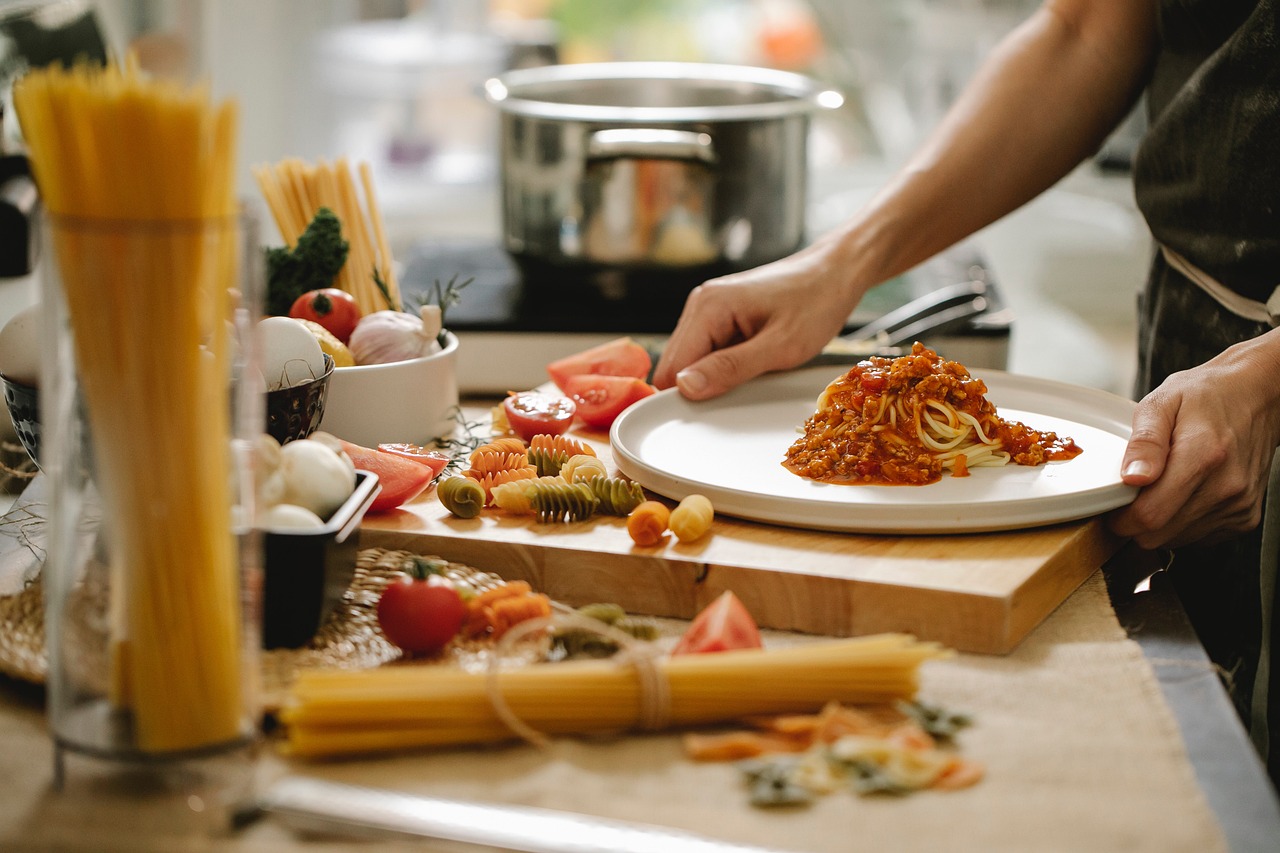
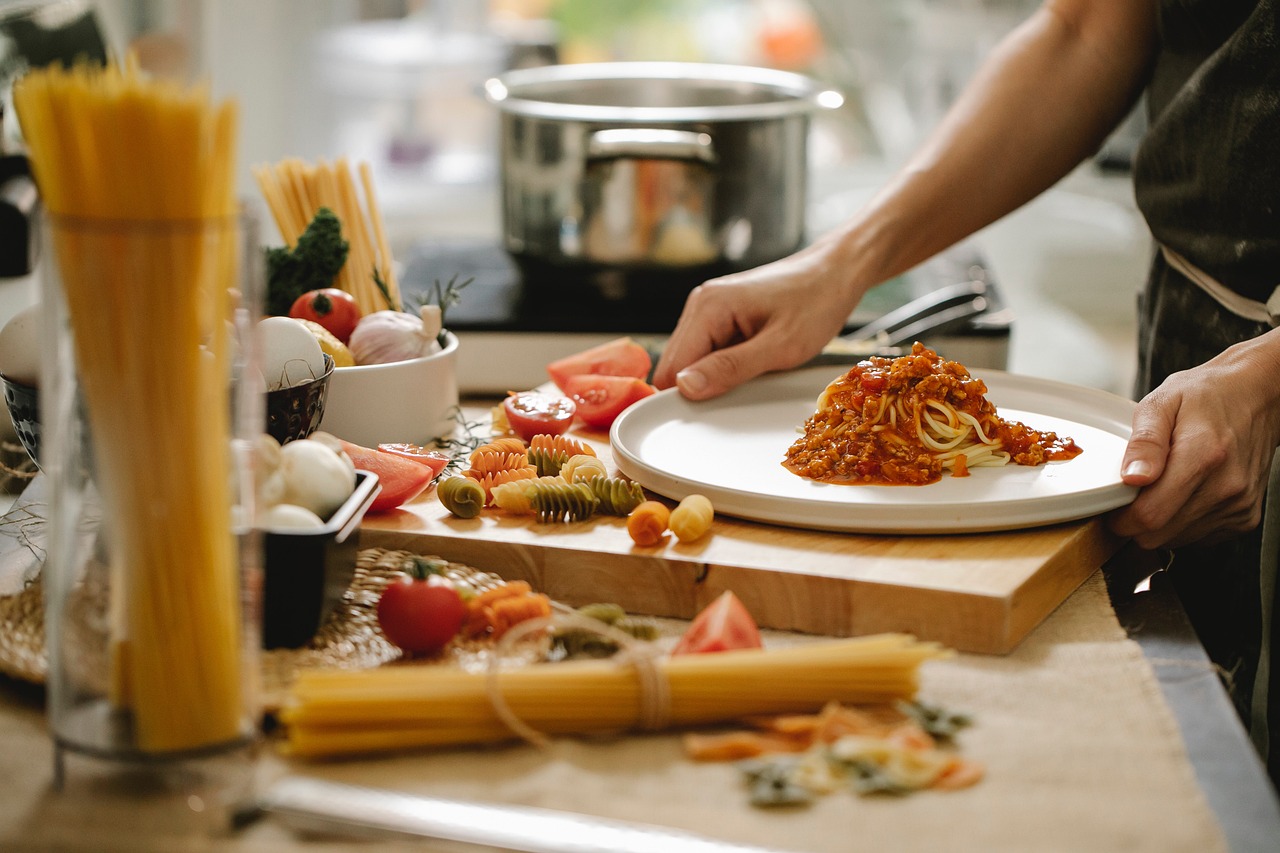
🍝 The Chinese Origins of Italian Pasta: Myth Versus Reality
For decades, a persistent myth claimed that Marco Polo brought pasta to Italy from China in the 13th century. This makes for a romantic story of cultural exchange, but archaeological and historical evidence tells a different tale. Pasta was already being consumed in Italy well before Polo’s travels, with references to pasta-like foods in Etruscan tombs and Roman texts.
What’s true is that both Italian and Chinese cultures independently developed noodle-making traditions, likely because wheat and water naturally lend themselves to creating dough that can be shaped into strands. The Chinese were making noodles as far back as 2000 BCE, while evidence of pasta in Italy dates to around the 4th century BCE.
The more interesting story is how pasta became so intrinsically linked to Italian identity. This happened relatively recently in historical terms—primarily in the 19th and 20th centuries when Italian immigrants brought their pasta traditions to America and elsewhere. The standardization of pasta shapes, the development of dried pasta for long-term storage, and the marriage of pasta with tomato sauce (a New World ingredient) all contributed to creating “Italian pasta” as we know it today.
☕ Coffee’s Journey: From Ethiopian Goats to Global Obsession
Legend credits an Ethiopian goat herder named Kaldi with discovering coffee around 850 CE after noticing his goats became energized from eating certain berries. While we can’t verify Kaldi’s existence, we know coffee originated in Ethiopia’s highlands and was being cultivated in Yemen by the 15th century.
What transformed coffee from a regional stimulant into a global commodity was colonialism and capitalism. Dutch traders broke the Arab monopoly on coffee cultivation by smuggling plants to their colonies in Java and Suriname. From there, coffee spread to the Caribbean, Central America, and Brazil, often cultivated by enslaved or exploited labor.
The modern coffee shop culture has even more recent origins. While coffeehouses existed in the Middle East and Europe for centuries, the “third wave” coffee movement that dominates today’s urban landscapes began in the 1980s with companies like Starbucks reimagining coffee as an artisanal, customizable experience rather than just a caffeine delivery system. This transformation increased coffee’s average retail price tenfold while often not proportionally benefiting the farmers who grow it.
🍩 The Doughnut’s Dutch Heritage and American Reinvention
Doughnuts descended from Dutch settlers’ olykoeks (oily cakes)—balls of dough fried in pork fat. When these settlers came to New Amsterdam (later New York) in the early 19th century, they brought their recipes with them. The problem was that these early doughnuts often had raw centers since the outside would cook faster than the inside.
The hole in the doughnut has multiple origin stories. Some credit it to Captain Hanson Gregory, a ship captain who in 1847 claimed he punched a hole in the center with his ship’s tin pepper box, solving the raw center problem while also creating more surface area for delicious fried crust. Others suggest the hole allowed doughnuts to be stacked on poles for easier transport and sale.
The modern doughnut industry really took off with two innovations: automated doughnut machines invented by Adolph Levitt in 1920, and the marketing genius of Vernon Rudolph, who founded Krispy Kreme in 1937. These entrepreneurs transformed doughnuts from ethnic specialty to American staple, creating an industry now worth over $7 billion in the United States alone.
🌶️ Reclaiming Culinary Credit: The Invisible Hands Behind Our Meals
As we uncover these food histories, patterns emerge. Many of our favorite dishes were created or perfected by immigrants, women, people of color, and working-class communities—yet credit often went to entrepreneurs with access to capital and marketing, or to the wealthy individuals who popularized these foods among elite circles.
Contemporary food historians are working to correct these omissions. We’re learning more about the enslaved West African cooks who developed much of what we call “Southern cuisine.” We’re acknowledging the indigenous peoples whose agricultural innovations gave us tomatoes, potatoes, corn, chocolate, and vanilla—ingredients that transformed global cuisine. We’re recognizing the home cooks and street vendors whose experiments never made it into cookbooks but shaped the foods we eat daily.
This reclamation matters because food is never just about sustenance—it’s about identity, power, and cultural exchange. When we understand who really created our favorite dishes and under what circumstances, we gain insight into larger histories of migration, colonialism, innovation, and adaptation.
🍽️ Why These Hidden Histories Matter Today
Understanding the true origins of our favorite foods changes how we consume them. It adds depth to every bite and encourages us to think about the complex networks of people, circumstances, and accidents that brought these dishes to our tables. It also reminds us that culinary innovation is ongoing—tomorrow’s classics are being created today in home kitchens, food trucks, and immigrant communities around the world.
These stories also challenge us to think about credit and compensation in the food industry. When large corporations profit from recipes developed by marginalized communities, what obligations exist to acknowledge and share that success? As food culture becomes increasingly documented through social media and digital platforms, perhaps future food histories will be more accurate and inclusive than those of the past.
The next time you bite into a chocolate chip cookie, fold a slice of pizza, or grab a quick sandwich, remember that you’re participating in a rich history of human creativity, adaptation, and sometimes fortunate accidents. These foods connect us to people we’ll never meet, places we may never visit, and moments of inspiration that happened decades or centuries ago. By uncovering these hidden histories, we honor the true creators behind the dishes we love and recognize that every meal is a story waiting to be told.
